By Mark Jarman with inputs from Federico Pérez Wodtke y Gabriel Tinghitella
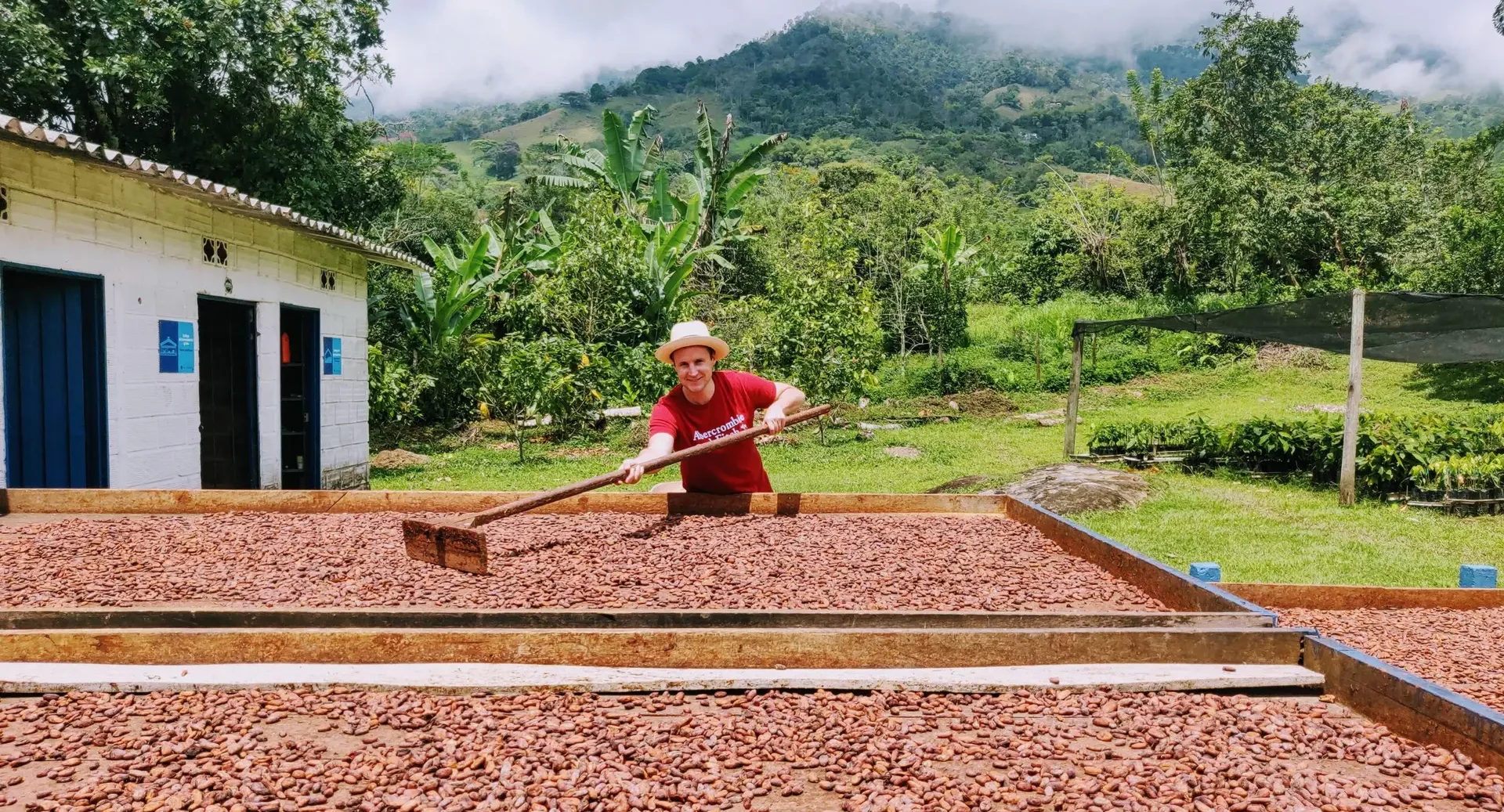
People ask me fairly regularly what it is like to work across Latin America’s agrifood sector. My standard answer is that it is the best job in the world, and I mean it. Over the past few years I have worked across the region and the different countries here, from the Colombian coffee corridor to the Argentine Pampas, from research stations in the cerrado to farmer groups in the amazon. I know this region not from reports and trade missions but from farms, field days, and conversations that run well past dinner. That depth matters when you write about it. Too many people comment confidently on Latin America having visited Brazil once, usually São Paulo state. That is not the same thing. This series is my attempt to write about what I have actually seen, heard, and been made to drink.

Argentina, where we start, is the obvious place to begin. Not just because they are the reigning world champions, which they are, deservedly, but because of what that Argentina team tells you if you watch them carefully. Messi is the headline, the global face, unmistakable. But the squad around him is what made the difference in Qatar. Di María turning up in finals when it matters most.
Julián Álvarez, emerging from Atlético Calchin and River Plate as a teenager, pressing and running for ninety minutes in a World Cup semi-final like his life depended on it. And underneath all of it, a collective belief that carried them through the moments when they nearly fell apart, the Saudi Arabia opener, 2 goals last minute comebacks from France and Netherlands. I have attended four games in Argentina: Rosario Central, Huracán, River Plate, and Boca Juniors. The noise is unlike anything I have experienced in football anywhere. There is a phrase you hear in Argentine football: *la pasión*. It sounds like a cliché until you are in the middle of it. During the Qatar 2022 World Cup, the crowd chanted unlimited times “En Argentina naci, tierra de Diego y Lionel. Muchachos ahora nos volvimos a ilusionar”(In Argentina I was born, land of Maradona and Messi. Guys now we are excited again).
From the roaring stadium terraces to the vast silent Pampas, Argentina expresses one enduring passion—where the same fervor that lifts chants for Messi in football is sown into the soil itself, blossoming after Qatar 2022 into fields etched with his face, as if the nation cultivates not only crops, but devotion.

My first proper introduction to Argentine agriculture came in June 2023, driving from General Rivas towards Rosario after visiting Glimax, an agtech company focused on bringing the technologies needed by farmers. Gabi Tinghitella, who runs innovation at CREA and has become a trusted colleague and friend, was in the car. We passed field after field of standing soybean and corn, unharvested. I asked what had happened. Gabi gestured at it matter-of-factly, no drama in his voice: the price hadn’t made sense. The farmers had run the numbers and left the crop in the ground.
In a country where farmers are simultaneously taxed at some of the highest rates in the world on their exports and operating in an economy with triple digit inflation, that kind of decision making is not unusual. It is, in fact, a sign of the sophistication of the Argentine farmer rather than failure. “In Argentina, every housewife could easily be a company’s CFO” said the CEO & Founder of a British start-up that had a 2 week immersion programme in Argentina thanks to an initiative I led in 2023/2024. The same situation happens with every entrepreneur. Productive decisions are taken alongside financial ones.

That precision is not accidental. It is the product of decades of collective, structured knowledge-sharing that does not exist anywhere else in quite the same form. CREA, Movimiento de Consorcios Regionales de Experimentación Agrícola, was founded in the late 1960s and now connects roughly 2,300 members across Argentina. The model, Originally taken from France to tackle soil erotion, is simple in concept and radical in execution: farmers come together in groups, share what is working and what is not, run trials on their own land, and hold each other to account. No embarrassment about failure. Genuine openness to learn. I presented in front of a CREA farmer group near Río Cuarto, in Spanish, the first time I had done anything like that since moving to Latin America, and the room was attentive, engaged, and generous. That environment does not happen by accident.
What Gabi and the CREA team have done is take that model and begin exporting it. CREA Hub is the international arm of the methodology, working with other countries and systems to build the same kind of structured, peer-learning environment for farmers. It is one of the most genuinely innovative things coming out of Argentine agriculture right now, and almost nobody outside the region knows about it. The CREA model is not a technology. It is a philosophy of collective intelligence applied to farming, they create value because they truly believe in what they do and it travels.

Beyond the institutional layer, the Argentine agtech start-up ecosystem is deeper than most people expect. Auravant, a local company operating on a freemium model, is now managing agricultural data across ten million hectares, a figure that should make people in the UK and Europe stop and pay attention. The company was built in Argentina, scaled within Argentina, and is now expanding across the region. It is one of many agtech start-ups that have emerged from Argentina’s agricultural sector since the mid-2010s, several of them backed by venture capital funds made up entirely of farmers. Argentine farmers are not passive recipients of technology. They are, in many cases, writing the cheques.
The digital agriculture market in Argentina sits at an estimated $83 million to $330 million in current potential, with room to grow significantly as more complex tools penetrate the decision-making process. Connectivity in the Pampa Húmeda is strong enough to support it, 4G coverage is close to full across the core productive region, and the newer generation of farmers, who according to INTA surveys average around 44 years old and are getting younger, are comfortable with data-driven tools in a way their predecessors were not.
Not everything is working. Decades of intensive soy monoculture have left a legacy of soil compaction and organic matter decline across parts of the Pampas that the sector is now taking seriously. Farmers who pioneered no-till farming, a genuinely world-changing contribution that Argentina exported to Uruguay, Paraguay, and much of the southern cone, are now grappling with the second-order consequences of a system that, applied at scale without sufficient rotation and biological input, creates its own problems. The conversations about regenerative practices and biological inputs are happening, and they are real, but the transition is not simple.
The livestock and sector is, frankly, behind where it should be. Argentina is globally recognised for its beef, like Messi, it is one of those things the world knows the name of before it understands what is behind it, but the technology stack in livestock and dairy trails the cereals sector by a significant margin. That is both a frustration and an opening for the right company. The infrastructure for trust, the farmer base with appetite for adoption, and the institutional networks to validate new approaches are all there. The sector just needs the right entry point and the patience to find it.

Gabi Tinghitella is not the loudest voice in Argentine agriculture. He is not the face on the conference stage or the name in the press release. He is Vélez Sársfield: Silent worker, technically excellent, promoter of new players, respected by everyone who has worked with him, the kind of player every team wants because the work gets done without fuss. From her perspective inside CREA, the challenge is not whether Argentine farmers want innovation, they do, demonstrably, in ways that would surprise most outside observers — but whether the ecosystem around them can match the pace they are setting.
That, I think, is the lesson Argentina offers the world, in football and in agriculture. The individual brilliance is visible. Messi is unmissable. The Pampas are unmissable. What you have to stay long enough to understand is the system behind the star: the CREA groups meeting on Tuesday evenings to share trial data, also the CREA week meetings every month to share and adjust the methodology the farmers financing start-ups with their own money, the agronomists with postgraduate degrees running operations at 300 hectares and treating every decision like a commercial strategy. Argentina has been doing structured, data-driven, collectively organised farming since before agtech was a word for it.
I have been here five times now in just over two years. Each visit teaches me something the previous one did not. The hospitality helps. Fede Perez Wodtke, the DBT AgriTech Lead for LATAM, had me at his friend’s house shortly after I arrived last year and handed me a drink I have to enjoy from the World Cup trophy. A test as an Englishman. The acceptance is instantaneous once you commit to it, just like “mate” on a farm, once you accept the gourd, you become a mate. Argentina is not a market you parachute into with a polished pitch deck. It is a market you learn by showing up, paying attention, and earning the right to be taken seriously. The team that wins the World Cup tends to be the one that did the same.
Federico Perez Wodtke Quote: “Both Argentine football and the agricultural sector share similar strengths and challenges. On the one hand, both draw on abundant natural resources rooted in a rich heritage and culture, fertile land, favorable climate, and talent, whether in crops or players. On the other hand, they must constantly navigate a difficult environment that often makes progress more challenging, shaped by economic instability, limited access to financing, and shifting political conditions. As a result, those who succeed are highly resilient, flexible, resourceful, and capable of adapting to adversity. In this way, despite, or perhaps because of, their challenging context, they emerge stronger and more capable.
The national football team, under the leadership of its coach, recognized that success depended on building the right ecosystem around its key player, Messi. The agricultural sector may be moving along a similar path. CREA, in particular, understands that to compete effectively in the AgriTech World Cup, the ecosystem must be fully integrated, with all stakeholders working together toward a shared goal”.
If you are working in agtech and thinking about Argentina, or if you want to connect with the CREA network or explore what start-ups and others are building, I would be glad to talk. Find me on LinkedIn or drop me a note at mark.jarman@agritierra.com
Subscribe to get the latest posts sent to your email.
© 2025 Privacy — Terms
Subscribe now to keep reading and get access to the full archive.